
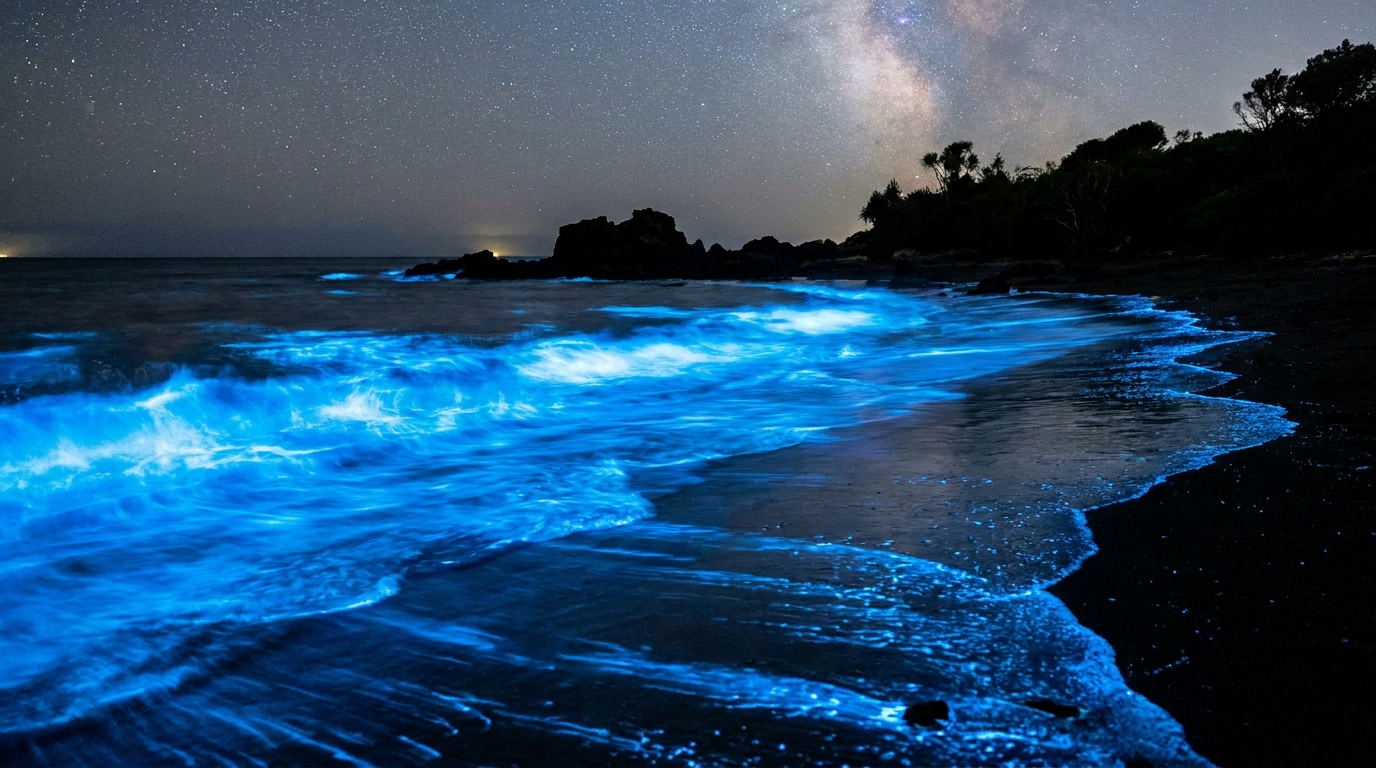
Picture yourself standing on one of the world’s bioluminescent beaches at night. A wave rolls in, and as it breaks, it lights up in a flash of glowing blue. You dip your hand into the water and tiny sparks swirl around your fingers. It looks like magic, but it is one of nature’s most beautiful science shows.
This glow is called bioluminescence, and it happens in a handful of special places around the world. Here is how it works, and ten of the best bioluminescent beaches and bays to add to your travel bucket list.
What makes the sea glow?
Bioluminescence is light produced by living things. In the ocean, the glow most people see comes from tiny single-celled organisms called dinoflagellates, a type of plankton. When the water around them is disturbed by a wave, a boat, a fish or your hand, a chemical reaction inside them releases a quick flash of blue-green light.
Scientists believe the flash may help protect them from predators by startling them or attracting bigger animals that eat the predators. Some other sea creatures, like certain squid and jellyfish, can also glow.
The glow is strongest in warm, calm, sheltered waters where these organisms gather in huge numbers, and it is easiest to see on dark nights with little moonlight and no city lights nearby.
1. Mosquito Bay, Vieques, Puerto Rico
Mosquito Bay on the island of Vieques holds the Guinness World Record for the brightest bioluminescent bay on Earth. The record, set in 2006, describes up to 700,000 tiny dinoflagellates per gallon of water. The organism responsible is called Pyrodinium bahamense, which roughly means “whirling fire.”
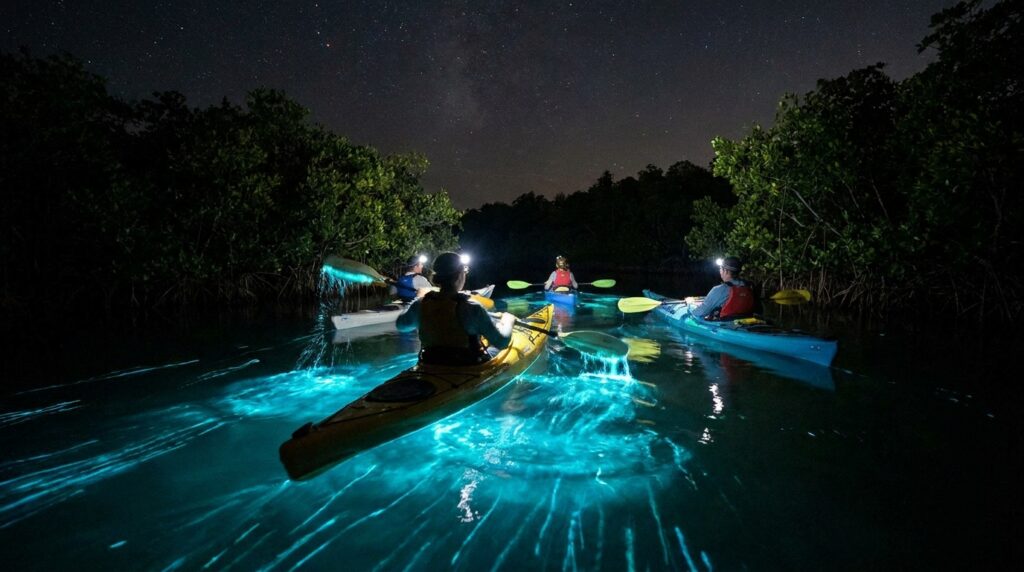
The narrow entrance to the bay keeps the organisms inside, and the surrounding mangroves feed them nutrients. Swimming is not allowed to protect this fragile ecosystem, but guided kayak and electric boat tours let you paddle through water that glows with every stroke.
2. Laguna Grande, Fajardo, Puerto Rico
Puerto Rico is lucky enough to have more than one glowing bay. Laguna Grande, on the island’s northeast coast, is easier to reach from San Juan than Vieques. Visitors take kayak tours through a winding mangrove channel before arriving at the lagoon, where the water sparkles beneath their paddles.
3. Vaadhoo Island, Maldives
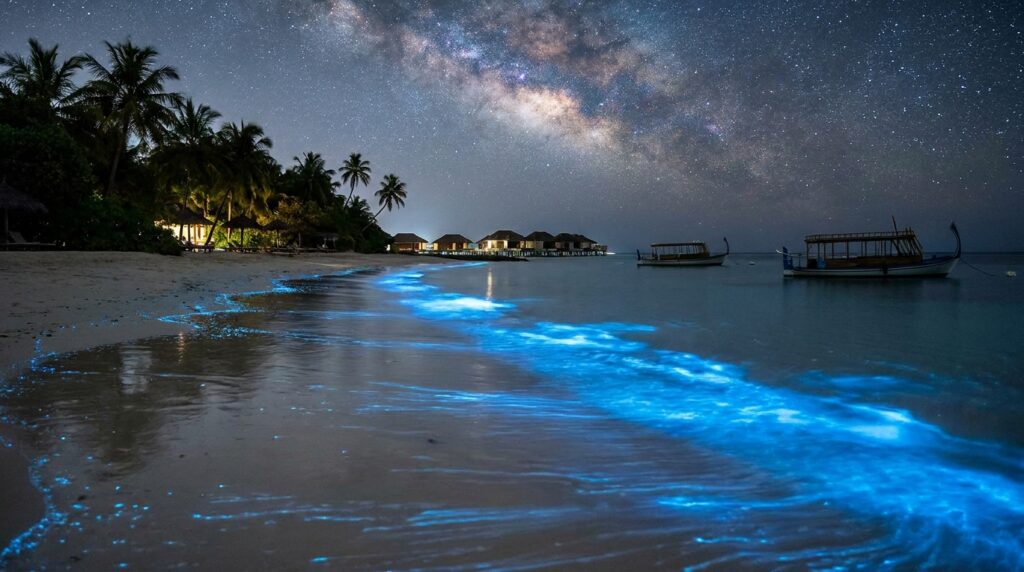
Vaadhoo is a small island in the Maldives that became famous online for its “Sea of Stars.” On certain nights, the waves along its beach glow bright blue, making the shoreline look like it is covered in tiny stars.
The glow here is not as predictable as in Puerto Rico’s bays, so seeing it is partly a matter of luck. But many resorts in the Maldives offer night swims and dives, and travelers often report seeing glowing plankton on different islands across the country.
4. Toyama Bay, Japan
Toyama Bay offers a completely different kind of glowing sea. Instead of plankton, the light here comes from firefly squid, small squid only a few centimeters long that are covered in light-producing organs.
From roughly March to June, the squid rise from deep water to the surface at night to spawn, filling the bay with flashes of blue light. Sightseeing boats leave the fishing port of Namerikawa in the early morning hours, and the town even has a museum dedicated to these glowing creatures.
5. Luminous Lagoon, Jamaica
Near the town of Falmouth on Jamaica’s north coast lies the Luminous Lagoon, where fresh water from a river mixes with salt water from the sea. This mix creates perfect conditions for glowing dinoflagellates.
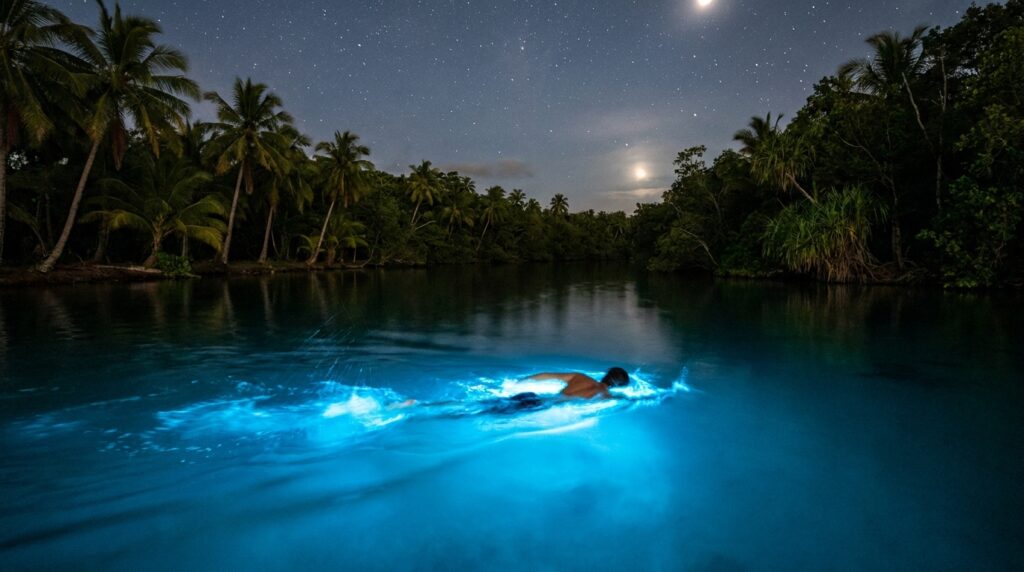
Short boat tours take visitors to the middle of the lagoon, and on many tours you are allowed to jump in. As you move, your whole body becomes outlined in sparkling blue light.
6. Matsu Islands, Taiwan
Off the coast of Taiwan, the Matsu Islands are famous for a phenomenon locals call the “Blue Tears.” During the warmer months, glowing algae light up the shores and coves of the islands.
Because the islands are fairly remote and have little light pollution, the glow can be especially vivid. Visitors usually reach Matsu by ferry or a short flight from Taiwan, and local tours help travelers find the best viewing spots.
7. Ha Long Bay, Vietnam
Ha Long Bay is already famous for its thousands of limestone islands rising out of emerald water, and it is a UNESCO World Heritage Site. After dark, glowing plankton can add an extra layer of magic.
Many overnight cruises in the bay offer night kayaking or swimming, and in the right conditions, the water around the boats lights up with every movement.
8. Manialtepec Lagoon, Mexico
Close to the surf town of Puerto Escondido on Mexico’s Pacific coast, Manialtepec Lagoon is one of the few places where you can swim in glowing water. Boat tours depart in the evening, and on dark nights around the new moon, the lagoon can be dazzling.
9. Koh Rong, Cambodia
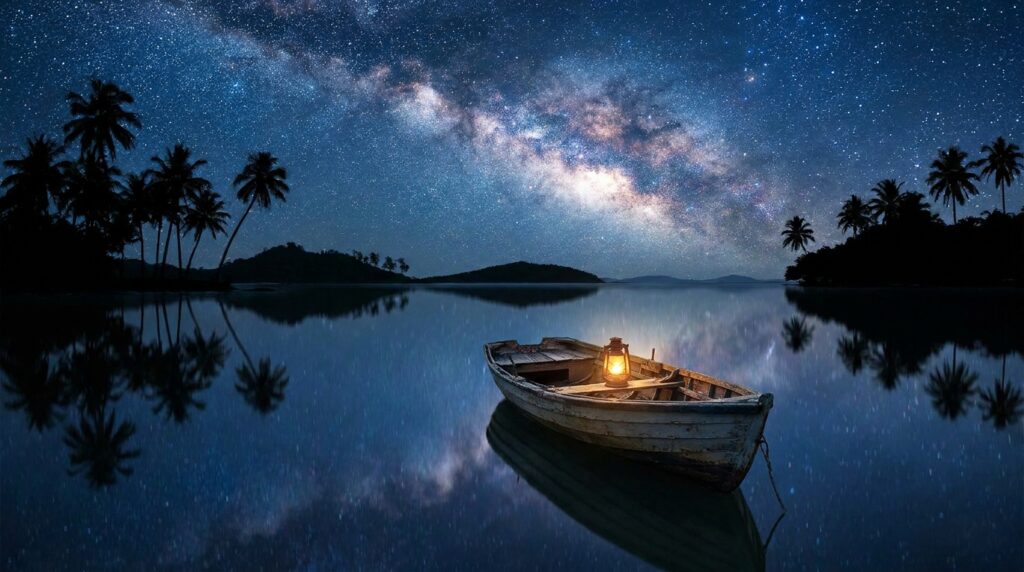
Koh Rong is a laid-back island off the southern coast of Cambodia, known for its white sand beaches and clear water. Because many parts of the island still have little electricity, nights can be very dark, which makes the glowing plankton easier to see. Guided night tours take visitors snorkeling and swimming in the sparkling water.
10. Indian River Lagoon, Florida, USA
Florida’s Indian River Lagoon stretches along much of the state’s Atlantic coast. In the warm summer months, roughly June to September, it often lights up with glowing plankton. The lagoon is a mix of fresh and salt water, and many stretches are far from bright city lights, which helps the glow stand out. Kayak tours are the most popular way to experience it, and fish darting beneath your boat can leave glowing trails like underwater fireworks.
Tips for visiting bioluminescent beaches
If you want the best chance of seeing glowing water, keep these tips in mind:
- Go on a dark night. Plan your visit close to the new moon, when there is little moonlight.
- Stay away from city lights. The darker your surroundings, the brighter the glow will appear.
- Book with responsible tour operators. Licensed guides know the best spots and help protect fragile ecosystems.
- Skip the bug spray and sunscreen if you swim. Chemicals can harm the tiny organisms that create the glow, and some bays ban them.
- Manage your camera expectations. The glow is hard to photograph with a phone. Enjoy the moment with your own eyes.
Bioluminescent beaches remind us that the natural world still has plenty of surprises. Whether you paddle through a glowing bay in Puerto Rico or watch firefly squid light up a Japanese harbor, it is an experience you will remember for the rest of your life.
Frequently asked questions
What causes bioluminescent beaches?
Most glowing beaches are caused by tiny plankton called dinoflagellates. When the water around them is disturbed, a chemical reaction makes them flash blue-green light.
Where is the brightest bioluminescent bay in the world?
Mosquito Bay on Vieques Island, Puerto Rico, holds the Guinness World Record for the brightest bioluminescent bay, with up to 700,000 dinoflagellates per gallon of water.
When is the best time to see bioluminescence?
Visit on a dark night close to the new moon, away from city lights. Warm months are usually best for most glowing beaches and bays.
Can you swim in bioluminescent water?
It depends on the place. Swimming is not allowed in Mosquito Bay to protect the ecosystem, but places like Jamaica’s Luminous Lagoon and Mexico’s Manialtepec Lagoon allow it.
Save this for later
You might also like
Want more? Browse all our Nature stories.