
A single photograph can capture a moment that changes how people see the world. But many famous historical photos have stories behind them that are just as interesting as the images themselves. Some were staged. Some were hoaxes. Some took hours to make, and some were taken almost by accident.
Here are 10 famous historical photos and the surprising stories behind them. Because many of these images are protected by copyright, we describe them here, and you can easily find the originals online or in museum collections.
1. The world’s oldest surviving photo (around 1826–1827)
The oldest surviving photograph taken with a camera is called View from the Window at Le Gras. French inventor Nicéphore Niépce made it by pointing a camera out of an upstairs window of his family estate in France. The image shows blurry rooftops and buildings.
What makes it amazing is the exposure time. Niépce coated a metal plate with a light-sensitive material, and the image needed many hours, possibly even days, of light to appear. Today the original plate is kept at the Harry Ransom Center at the University of Texas at Austin.
2. The first selfie (1839)
Long before smartphones, a young American named Robert Cornelius set up a camera behind his family’s shop in Philadelphia, removed the lens cap and ran into the frame. He had to sit still for several minutes while the image formed.
The result is a slightly off-center portrait with messy hair and crossed arms, and it is often called the first selfie in history. On the back, he wrote that it was the first light picture ever taken.
3. Lunch atop a Skyscraper (1932)
One of the most famous photos of the 20th century shows 11 construction workers eating lunch on a steel beam high above New York City, with their feet dangling over the edge. It looks like an ordinary lunch break, but it was actually a publicity stunt.
The photo was taken on September 20, 1932, on the 69th floor of what is now 30 Rockefeller Plaza, to promote the new Rockefeller Center. The workers were real ironworkers, but the scene was arranged for the cameras. For decades, nobody was completely sure who took the picture, as several photographers were there that day.
4. Migrant Mother (1936)
Photographer Dorothea Lange took this image in March 1936 at a camp of pea pickers in California during the Great Depression. It shows a tired mother with her children leaning on her shoulders, and it became one of the most famous photos of that difficult time.
For more than 40 years, the woman’s name was not widely known. In the late 1970s, she was identified as Florence Owens Thompson. She later said she had mixed feelings about becoming the face of poverty.
5. Raising the Flag on Iwo Jima (1945)
On February 23, 1945, during World War II, Associated Press photographer Joe Rosenthal photographed six U.S. Marines raising an American flag on Mount Suribachi on the island of Iwo Jima.
Many people do not know that this was actually the second flag raised on the mountain that day. A smaller flag had been put up earlier, and it was replaced with a larger one that could be seen from farther away. Rosenthal’s photo won the Pulitzer Prize and later inspired the Marine Corps War Memorial in Virginia.
6. V-J Day in Times Square (1945)
On August 14, 1945, people filled Times Square in New York to celebrate the end of the war with Japan. Photographer Alfred Eisenstaedt captured a sailor kissing a woman in a white dress, and the photo became one of the best-known images of the celebrations.
Eisenstaedt did not record their names, and for decades many people claimed to be the couple. Today, many historians believe they were George Mendonsa and Greta Zimmer Friedman, who did not know each other. In recent years, the photo has also sparked discussion about consent.
7. Einstein sticks out his tongue (1951)
On March 14, 1951, Albert Einstein’s 72nd birthday, photographers followed him after a celebration. As he sat in a car, photographer Arthur Sasse asked for one more smile. Einstein, tired of posing, stuck out his tongue instead.
Rather than being upset, Einstein loved the photo. He even asked for copies to send to friends. It is now one of the most famous photos of the scientist.
8. The Loch Ness “Surgeon’s Photo” (1934)
This blurry black-and-white photo seemed to show a long neck and small head rising from Scotland’s Loch Ness. It was credited to a respected London doctor, which made people take it seriously, and it became the most famous “evidence” of the Loch Ness Monster.
In 1994, the truth came out. The “monster” was a small model head and neck attached to a toy submarine. It was one of the most successful photo hoaxes of the 20th century.
9. Earthrise (1968)
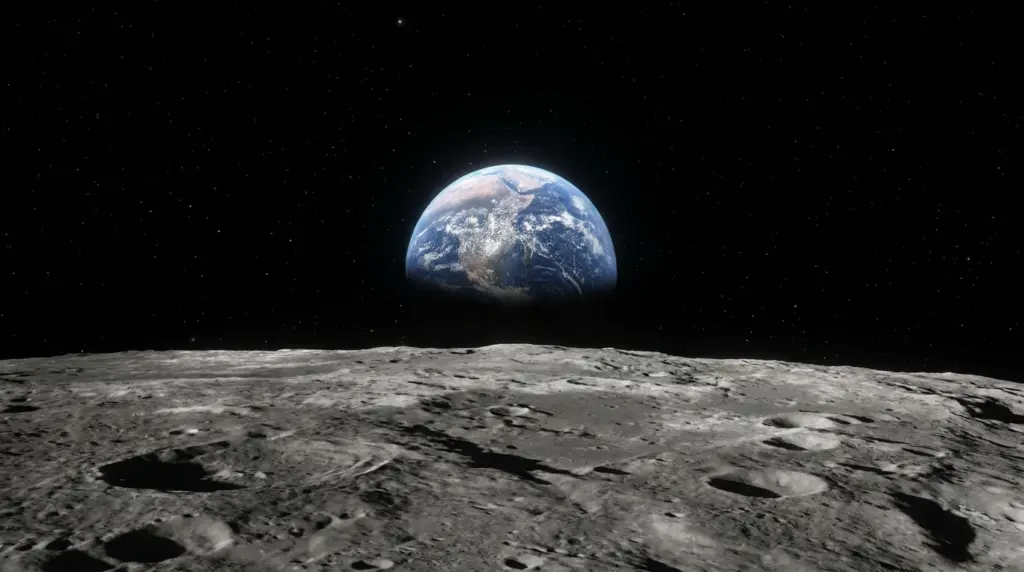
On December 24, 1968, Apollo 8 astronaut Bill Anders looked out of the spacecraft’s window as it orbited the Moon and saw Earth rising over the lunar horizon. He quickly grabbed a camera and took the shot.
Like many famous historical photos, Earthrise changed how people saw the world. It showed our planet as a small, fragile blue world in the darkness of space. Many people credit it with helping inspire the environmental movement.
10. The Pale Blue Dot (1990)
On February 14, 1990, the Voyager 1 spacecraft turned its camera back toward home from about 6 billion kilometers away. In the image, Earth appears as a tiny speck, smaller than a single pixel, floating in a beam of scattered sunlight.
Astronomer Carl Sagan had pushed for the photo to be taken. He later wrote that everyone you love and everyone you have ever heard of lived out their lives on that small dot.
Why famous historical photos still matter
These famous historical photos remind us that pictures do not just record history. They shape how we remember it. Some photos are carefully planned, some are lucky accidents and a few are not what they seem at all.
The next time you see an iconic photo, ask yourself what happened just before and just after the shutter clicked. The real story is often even more interesting.
If you enjoyed reading about these famous historical photos, you might also love our stories about famous stolen paintings and artists who became famous after death.
Frequently asked questions
What is the oldest photo in the world?
The oldest surviving camera photograph is View from the Window at Le Gras, made by Nicéphore Niépce in France around 1826 to 1827.
Was Lunch atop a Skyscraper staged?
Yes. The workers were real ironworkers, but the photo was arranged as a publicity stunt for Rockefeller Center in 1932.
Who took the first selfie?
Robert Cornelius took what is often called the first selfie in 1839 in Philadelphia.
Was the Loch Ness Monster photo fake?
Yes. In 1994, it was revealed that the famous 1934 Surgeon’s Photo showed a model head attached to a toy submarine.
Save this for later

You might also like
Want more? Browse all our Photography stories.