
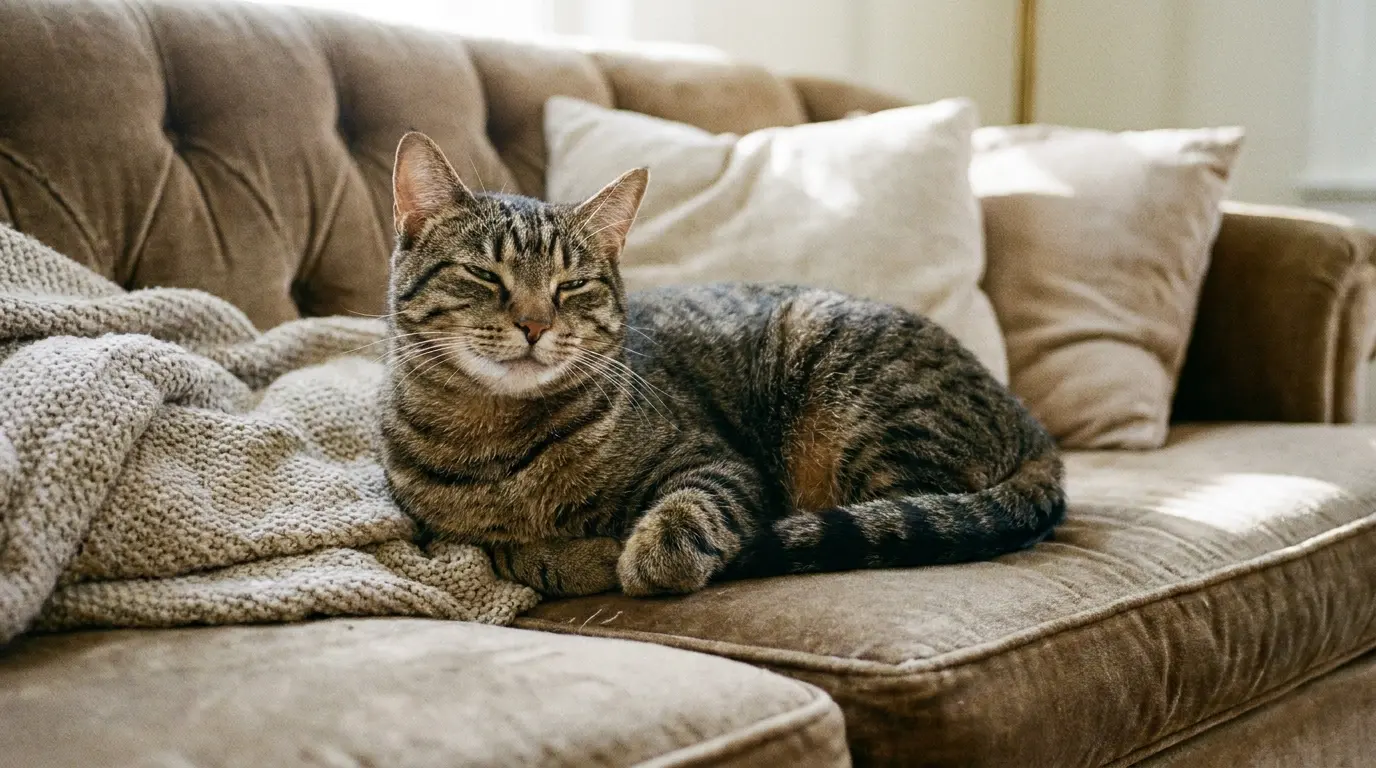
There are few sounds as relaxing as a cat curled up on your lap, purring away like a tiny engine. Most people assume that purring simply means a cat is happy. That is often true, but it is only part of the story. Cats also purr when they are hungry, nervous, injured and even giving birth. So why do cats purr?
Scientists have been studying purring for decades, and the answers are more surprising than you might think. In this guide, we explain how cats make the sound, the different reasons they do it, and the clever purr some cats use to get what they want from their humans.
What is purring?
Purring is a soft, continuous, rumbling sound that cats make with their mouths closed. It usually has a steady rhythm and can go on for minutes or even hours. Domestic cats purr at a low frequency, roughly between 25 and 150 vibrations per second.
What makes purring special is that cats can do it while breathing in and breathing out. Most animal sounds, including human speech, only happen when air flows out of the lungs. Purring carries on in both directions, which is why it sounds so smooth and unbroken.
How do cats purr?
For a long time, nobody was quite sure how cats produced the sound. Today, most scientists agree that purring comes from the larynx, or voice box. A signal from the brain makes the muscles of the larynx twitch very quickly. These rapid twitches open and close the space between the vocal cords, and the air passing through creates vibrations. Movement of the diaphragm helps keep the rhythm going as the cat breathes in and out.
A 2023 study suggested that cats may also have special tissue in their vocal folds that helps them make such low sounds without much effort. Research on purring is still going on, which shows how mysterious this everyday sound really is.
Why do cats purr? 7 main reasons
Cats purr for many reasons, and the meaning often depends on the situation and the cat’s body language.
1. Cats purr when they are happy and relaxed
This is the classic reason. A cat that is being stroked, lying in a sunny spot or snuggling with you will often purr. In this case, purring usually comes with relaxed ears, slow blinking, soft eyes and sometimes kneading. It is a sign that your cat feels safe and comfortable.
2. Mother cats and kittens use purring to communicate
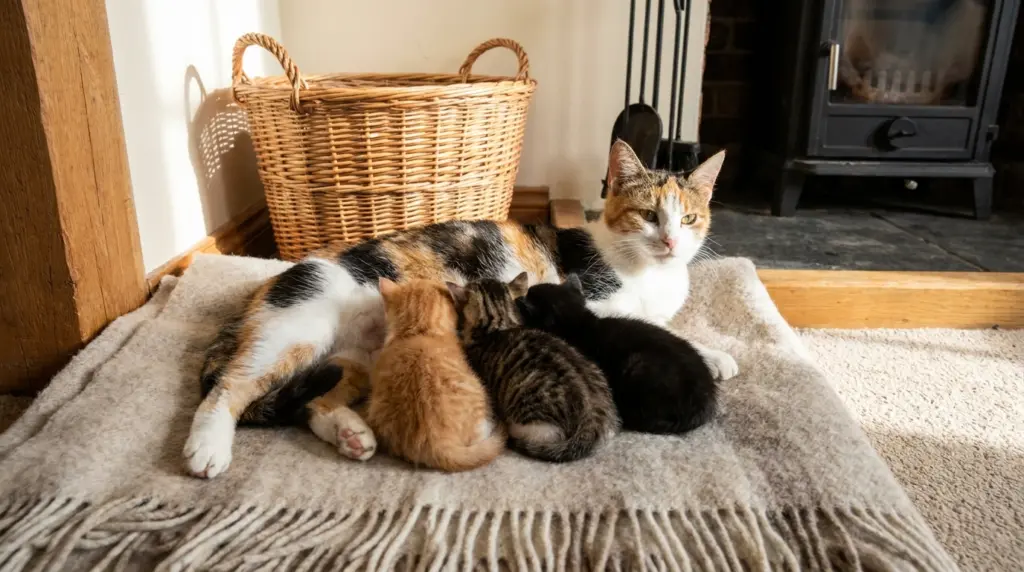
Purring starts very early in life. Kittens can purr when they are only a few days old, usually while nursing. Kittens are born blind and deaf, but they can feel the vibration of their mother’s purr. The sound helps guide them toward her for warmth and milk.
Kittens purr back to let their mother know they are fine. In this way, purring works like a simple message system between a mother and her babies.
3. Cats purr to ask for food
Have you noticed that your cat’s purr sounds different when breakfast is late? Scientists noticed it too. A 2009 study from the University of Sussex found that some cats use a special “solicitation purr” when they want food. Hidden inside the normal purr is a higher-pitched sound, a little like a cry.
When people listened to recordings, they rated these purrs as more urgent and less pleasant than normal purrs, even people who did not own cats. The researchers think this high-pitched element may tap into our natural sensitivity to a baby’s cry. In other words, your cat may have learned how to push your buttons.
4. Cats purr when they are stressed or scared
Purring is not always a sign of contentment. Many cats purr at the vet, during a car journey or when they feel unsure. In these situations, purring may help a cat calm itself down, much like a person humming or taking deep breaths when nervous.
Look at the rest of the body to understand the mood. Flattened ears, a tense body, wide eyes or a twitching tail mean your cat is probably anxious, even if it is purring.
5. Cats purr when they are in pain or unwell
Cats are experts at hiding pain, and some will purr when they are injured or sick. Female cats often purr while giving birth, and some cats purr in their final moments of life. This suggests that purring may help soothe the cat and perhaps release calming, pain-relieving chemicals in the brain.
If your cat is purring but also hiding, not eating, breathing fast or moving stiffly, take it to a vet. Do not assume everything is fine just because you hear purring.
6. Purring may help cats heal
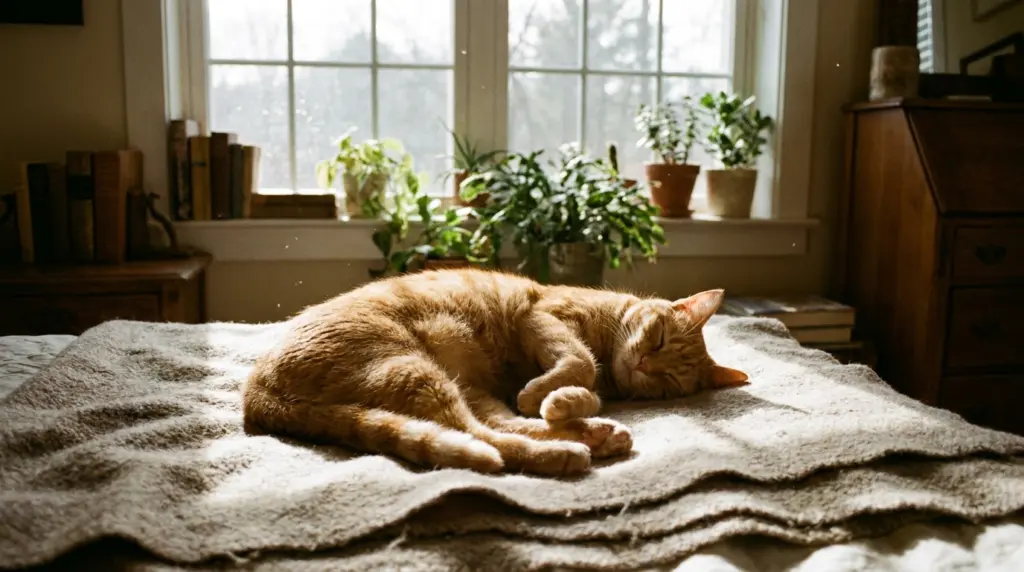
One of the most interesting ideas about purring is that it may help the body repair itself. Some researchers have pointed out that the frequencies of a cat’s purr, especially around 25 to 50 Hz, are similar to frequencies used in therapies that help bones and tissues heal.
This theory is not proven yet, but it could help explain why cats spend so much energy purring even when resting or recovering. It might be a kind of built-in, low-energy healing system.
7. Purring helps cats bond with people
Cats that live with people often purr more around their favorite humans. Purring during cuddles strengthens the bond between cat and owner, and many people find the sound relaxing. Some studies even suggest that living with a cat may be linked to lower stress, although more research is needed.
Do all cats purr?
All domestic cats can purr, although some purr very quietly and others sound like a lawnmower. In the wild cat family, the story is more complicated. Smaller wild cats, such as cheetahs, bobcats, servals and cougars, can purr. The big roaring cats, such as lions, tigers, leopards and jaguars, have a different throat structure that lets them roar but stops them from purring continuously like a house cat.
Some other animals make purr-like sounds too, including raccoons, guinea pigs and even some bears and hyenas, but the cat’s purr remains the most famous.
Why does my cat purr so loudly?
Purring volume varies a lot from cat to cat. Some cats have very soft purrs that you can only feel, while others are so loud you can hear them across the room. One British cat named Merlin was recognized for having an extremely loud purr, similar in volume to a dishwasher.
A loud purr is usually nothing to worry about. If your cat’s purr suddenly changes or sounds raspy, or comes with breathing problems, it is worth a vet check.
How to tell what your cat’s purr means
Because cats purr in so many situations, the best way to understand a purr is to look at the whole picture:
- Happy purr: relaxed body, slow blinking, kneading, soft eyes, tail calm or gently curved.
- Hungry purr: purring near the food bowl or kitchen, often louder, with meowing or rubbing against your legs.
- Nervous purr: tense body, ears back, wide eyes, hiding or crouching.
- Unwell purr: purring combined with hiding, not eating, lethargy or unusual breathing.
Why do cats purr? Final thoughts
So, why do cats purr? Mostly to communicate and to feel good. Cats purr when they are happy, when they want food, when they are nursing their kittens and when they need to calm themselves down. Purring may even help their bodies heal.
Next time your cat curls up on your lap and starts purring, you will know there is a lot more going on than a simple happy sound. And if you hear that urgent breakfast purr, you will know exactly who is training whom.
If you enjoyed reading about cat behavior, you might also love our stories about why cats knead and funny animal facts that sound fake.
Please note: This article is for general information only and is not a substitute for professional veterinary advice. If you are worried about your pet’s health or behavior, please contact your vet.
Frequently asked questions
Why do cats purr when you pet them?
Cats usually purr when you pet them because they feel relaxed and safe. Purring during petting also helps strengthen the bond between cat and owner.
Do cats purr when they are in pain?
Yes. Some cats purr when injured, sick or giving birth. Purring may help them calm down, so it is not always a sign of happiness.
How do cats purr?
Purring comes from rapid twitching of the muscles in the larynx, which opens and closes the vocal cords as the cat breathes in and out.
Can lions and tigers purr?
Big roaring cats such as lions and tigers cannot purr continuously like house cats. Smaller wild cats such as cheetahs, servals and cougars can purr.
Why does my cat purr so loud when it wants food?
Many cats use a solicitation purr with a hidden high-pitched cry. A 2009 study found people find this purr more urgent and harder to ignore.
Watch a story or save this one
Tap the story for another quick fact, or pin this article to read again later.

You might also like
Want more? Browse all our Animals stories.