

In 1590, an English ship arrived at Roanoke Island off the coast of what is now North Carolina. The governor, John White, was returning to the colony he had left three years earlier, including his wife’s family, his daughter and his baby granddaughter. But when he arrived, everyone was gone.
There were no bodies and no signs of a battle. The only clue was a single word carved into a wooden post: “CROATOAN.” More than 400 years later, the Roanoke Colony mystery remains one of the greatest unsolved puzzles in American history.
The first attempt at Roanoke
The story begins in the 1580s, when Sir Walter Raleigh received permission from Queen Elizabeth I to establish an English settlement in North America. An early group of men arrived on Roanoke Island in 1585, but conflicts with local Native American communities and a lack of supplies made life difficult.
In 1586, most of these men sailed back to England. The first attempt had failed, but Raleigh was determined to try again.
The Roanoke Colony of 1587
In 1587, a new group of about 115 men, women and children arrived to build a permanent settlement. Their governor was an artist and mapmaker named John White.
A few weeks after they landed, on August 18, 1587, White’s daughter Eleanor gave birth to a baby girl named Virginia Dare. She was the first English child born in the Americas.
Supplies were already running low. The colonists convinced White to sail back to England to collect more food and equipment. He expected to return within months.
A three-year delay
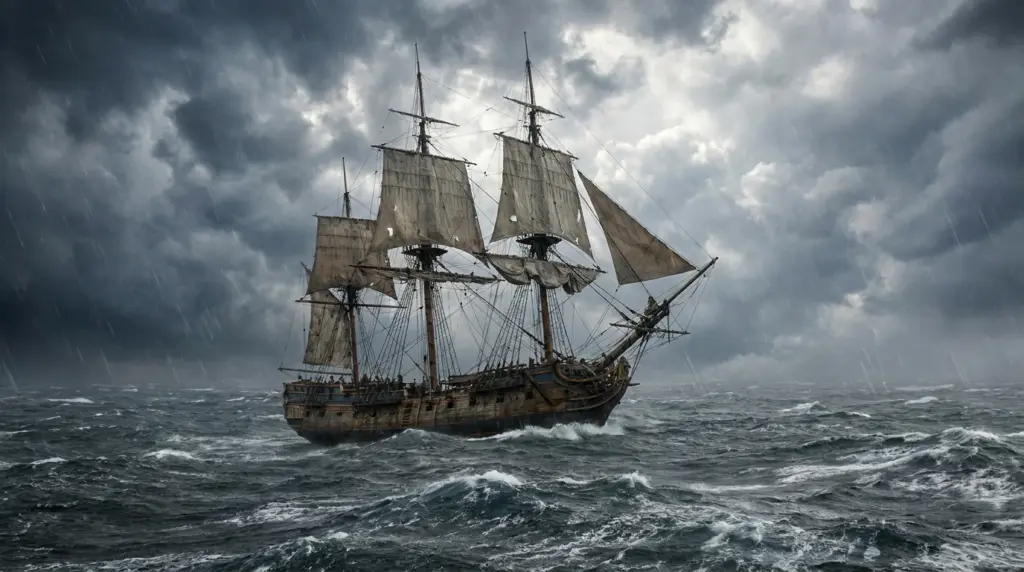
When White reached England, the country was preparing for war with Spain. In 1588, the Spanish Armada sailed to attack England, and almost every ship was needed for the war. White’s attempts to return were delayed again and again.
It was not until August 1590, three years later, that White finally reached Roanoke Island. By coincidence, he arrived on his granddaughter Virginia’s third birthday.
“CROATOAN”: the only clue
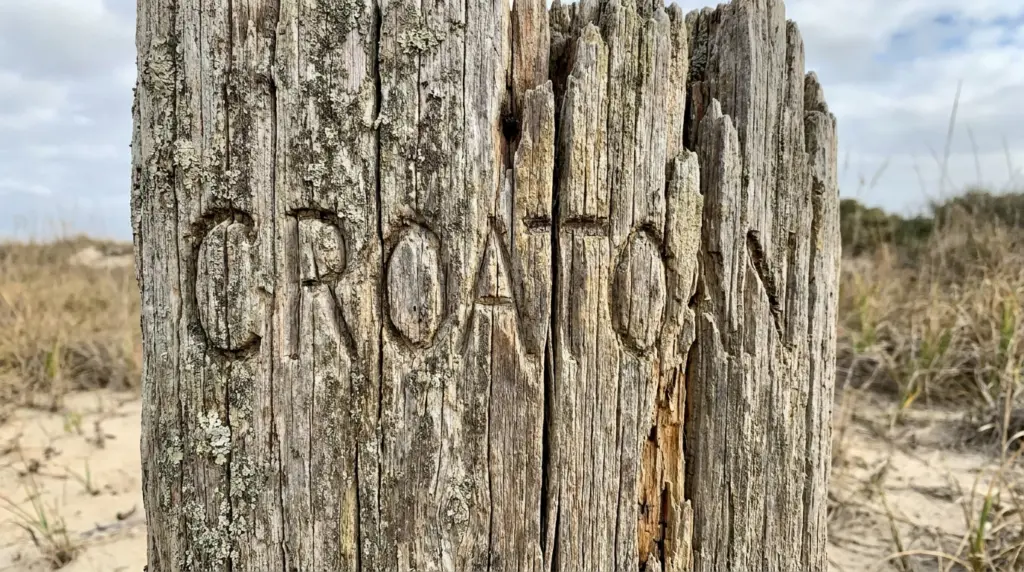
White found the settlement deserted. The houses had been taken down, and a wooden fence called a palisade had been built around the area. Carved into one of the posts was the word “CROATOAN.” On a nearby tree, someone had carved the letters “CRO.”
Before he left in 1587, White had agreed with the colonists that if they moved, they would carve the name of their new location. If they were in danger, they would add a cross. There was no cross. White believed the colonists had gone to Croatoan Island, about 80 kilometers south, where friendly Croatoan people lived.
But a storm was approaching, his ship was damaged, and the crew refused to continue the search. White sailed home and never returned. He never saw his family again.
Theories about the Roanoke Colony mystery
Without clear evidence, historians and archaeologists have developed several theories about what happened to the lost colony.
They joined the Croatoan people
The most popular theory is that some or all of the colonists moved to Croatoan Island, now part of Hatteras Island, and lived with the Croatoan people. Over time, they may have married into the community. Archaeologists working on Hatteras Island have found European objects from around that period, such as pieces of metal and a sword handle, although experts still debate exactly who left them.
They moved inland
Another theory suggests that the colonists moved inland. In 2012, researchers at the British Museum examined one of John White’s original maps and found a symbol hidden beneath a patch of paper. The symbol, which looked like a fort, was drawn at a spot on the mainland near Albemarle Sound. Archaeologists later explored the area, now known as “Site X,” and found pottery that may be linked to English settlers.
They were killed
Some historians believe the colonists may have died from starvation, disease or conflict. Later English settlers at Jamestown heard reports that some Roanoke colonists had been killed, but these accounts were never proven.
They tried to sail home
A few people think the colonists may have built a small boat and tried to sail back to England, only to be lost at sea. There is no direct evidence for this theory.
The fake “Dare Stones”
In 1937, a man claimed to have found a stone carved with a message from Eleanor Dare describing the fate of the colonists. Dozens more “Dare Stones” soon appeared. Most historians now believe the stones were a hoax, but the original stone is still studied with interest.
Why the Roanoke Colony mystery still fascinates us
The Roanoke Colony mystery has inspired books, documentaries and even an outdoor play called The Lost Colony, which has been performed on Roanoke Island since 1937. The story touches on survival, family, cultural contact and the unknown.
Many historians now believe the truth may be a mix of theories: the colonists may have split into smaller groups, with some joining Native American communities and others moving inland. Until new evidence is found, the lost colony will remain a mystery.
If you enjoyed reading about the Roanoke Colony mystery, you might also love our stories about abandoned places around the world and jobs that no longer exist.
Frequently asked questions
What happened to the Roanoke Colony?
Nobody knows for sure. The most popular theory is that the colonists joined the Croatoan people on what is now Hatteras Island, but others may have moved inland or died.
What word was found at Roanoke?
The word “CROATOAN” was carved into a post, and the letters “CRO” were carved into a nearby tree.
Who was Virginia Dare?
Virginia Dare, born on August 18, 1587, was the first English child born in the Americas. She was John White’s granddaughter and vanished with the colony.
How many people disappeared from Roanoke?
About 115 men, women and children were part of the 1587 Roanoke Colony.
Save this for later
You might also like
Want more? Browse all our History stories.