
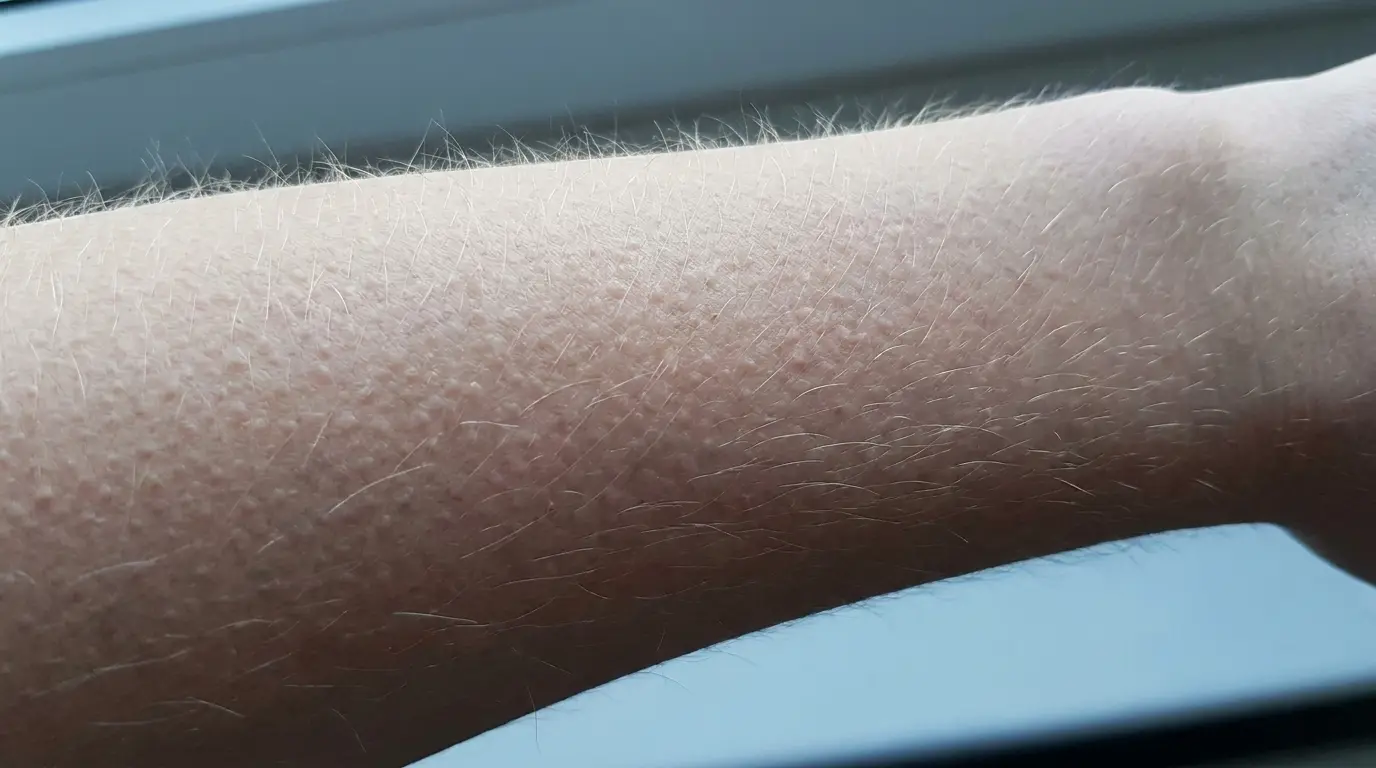
You step outside on a freezing morning, hear an amazing song, or watch the scariest scene in a horror movie, and suddenly the skin on your arms is covered in tiny bumps. The hairs stand up and you feel a little shiver. So why do we get goosebumps?
Goosebumps are a reflex that we share with many other mammals. They may look useless on humans today, but they are a fascinating leftover from our furry past, and new research shows they may still do something useful.
What are goosebumps?
Goosebumps are small bumps that appear on the skin around the base of body hairs. Scientists call this reaction piloerection, which simply means “hair standing up.”
Each hair on your body grows from a follicle. Attached to each follicle is a tiny muscle called the arrector pili. When this muscle tightens, it pulls the hair upright and pushes the skin around it up into a little bump. Thousands of these bumps appearing together create the goose bumps you can see and feel.
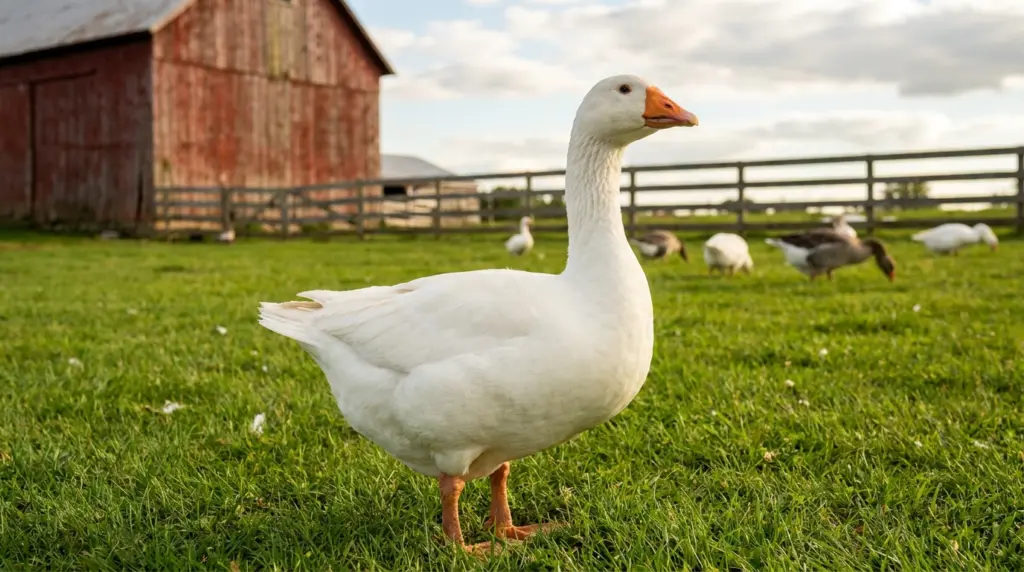
Why are they called goosebumps?
The name comes from the skin of a goose after its feathers have been plucked. The bumpy skin where the feathers used to be looks a lot like human skin with goose bumps. Many languages use a similar idea. In German, the word means “goose skin,” while in Spanish, people talk about “chicken skin.”
Why do we get goosebumps when we are cold?
When you feel cold, your nervous system automatically sends a signal to the tiny muscles in your skin. You do not choose to do it. It is controlled by the sympathetic nervous system, the same system involved in the “fight or flight” response.
For our hairy ancestors, and for many animals today, this reaction was very useful. When hair or fur stands up, it traps a layer of air close to the skin. That air acts like insulation and helps keep the body warm. Birds do something similar when they fluff up their feathers on a cold day.
Humans have much less body hair, so goosebumps do not keep us very warm anymore. But the reflex has stayed with us.
Why do we get goosebumps when we are scared?
Fear triggers the fight or flight response. Your body releases adrenaline, your heart beats faster and, yes, those tiny hair muscles tighten too.
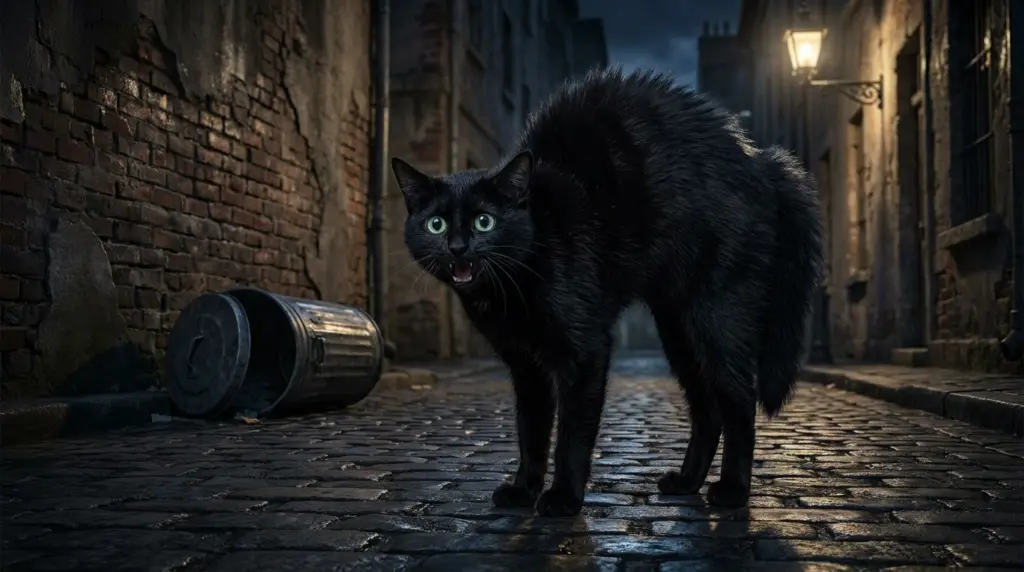
In animals, this makes a lot of sense. When a frightened cat arches its back, its fur stands on end and it suddenly looks bigger. A porcupine raises its sharp quills when threatened. Looking larger and more dangerous can scare away predators. In humans, piloerection is mostly a reminder of that ancient survival trick.
Why do we get goosebumps from music?
Many people get goosebumps when they hear a powerful piece of music, a beautiful voice or an emotional moment in a film. This feeling is sometimes called “frisson” or simply “chills.”
Scientists believe emotional goosebumps happen because strong feelings activate the same nervous system that controls the reflex. Some studies suggest that people who often get chills from music may have stronger connections between the parts of the brain that process sound and those that process emotion. Interestingly, not everyone experiences music chills, and how often they happen varies a lot from person to person.
Goosebumps may help your hair grow
For a long time, goosebumps were seen as a simple leftover from evolution. But a 2020 study by scientists at Harvard University found something surprising. They discovered that the nerve and muscle that cause goosebumps also help control the stem cells that make new hair.
In the study, which was done in mice, long-term cold exposure activated these stem cells and encouraged new hair growth. The researchers suggested that goosebumps may be a quick response to cold, while the same system also helps the body grow a thicker coat over time.
Some people can get goosebumps on purpose
Most people have no control over their goosebumps. But a small number of people say they can make goosebumps appear simply by deciding to. A 2018 study looked at 32 people who reported this unusual ability. Many of them could do it on command, sometimes on just one part of the body. Scientists are still not sure exactly how they manage it.

7 quick facts about goosebumps
- Goosebumps are controlled by your nervous system, not by your conscious mind.
- The tiny muscle that causes them is called the arrector pili.
- They are also called goose bumps, goose pimples or goose flesh.
- Animals with fur and feathers use the same reflex to stay warm.
- Fear, cold and strong emotions can all trigger them.
- Music and movies are common causes of emotional goosebumps.
- A few people can make goosebumps appear on purpose.
Why do we get goosebumps? Final thoughts
So, why do we get goosebumps? They are an ancient reflex that once helped our furry ancestors stay warm and look bigger when danger appeared. Today, goosebumps mostly show up when we are cold, scared or deeply moved, and science suggests they may still play a small role in helping our hair grow. Not bad for a few tiny bumps on your skin.
If you enjoyed reading about goosebumps, you might also love our stories about why we yawn and weird facts about the human body.
Please note: This article is for general information only and is not a substitute for professional medical advice. If you have any concerns about your health, please talk to a doctor.
Frequently asked questions
Why do we get goosebumps when we are cold?
Cold triggers tiny muscles at the base of each hair to tighten, making the hair stand up. In furry animals, this traps warm air close to the skin.
Why do we get goosebumps from music?
Strong emotions activate the same nervous system that controls goosebumps. Some people get these chills, also called frisson, more easily than others.
Are goosebumps useful for humans?
Mostly they are a leftover from our hairy ancestors, but a 2020 Harvard study in mice found the same nerve and muscle system also helps activate hair growth.
Can you give yourself goosebumps?
A small number of people can. A 2018 study looked at 32 people who reported being able to produce goosebumps on purpose.
Save this for later
You might also like
Want more? Browse all our Viral stories.