
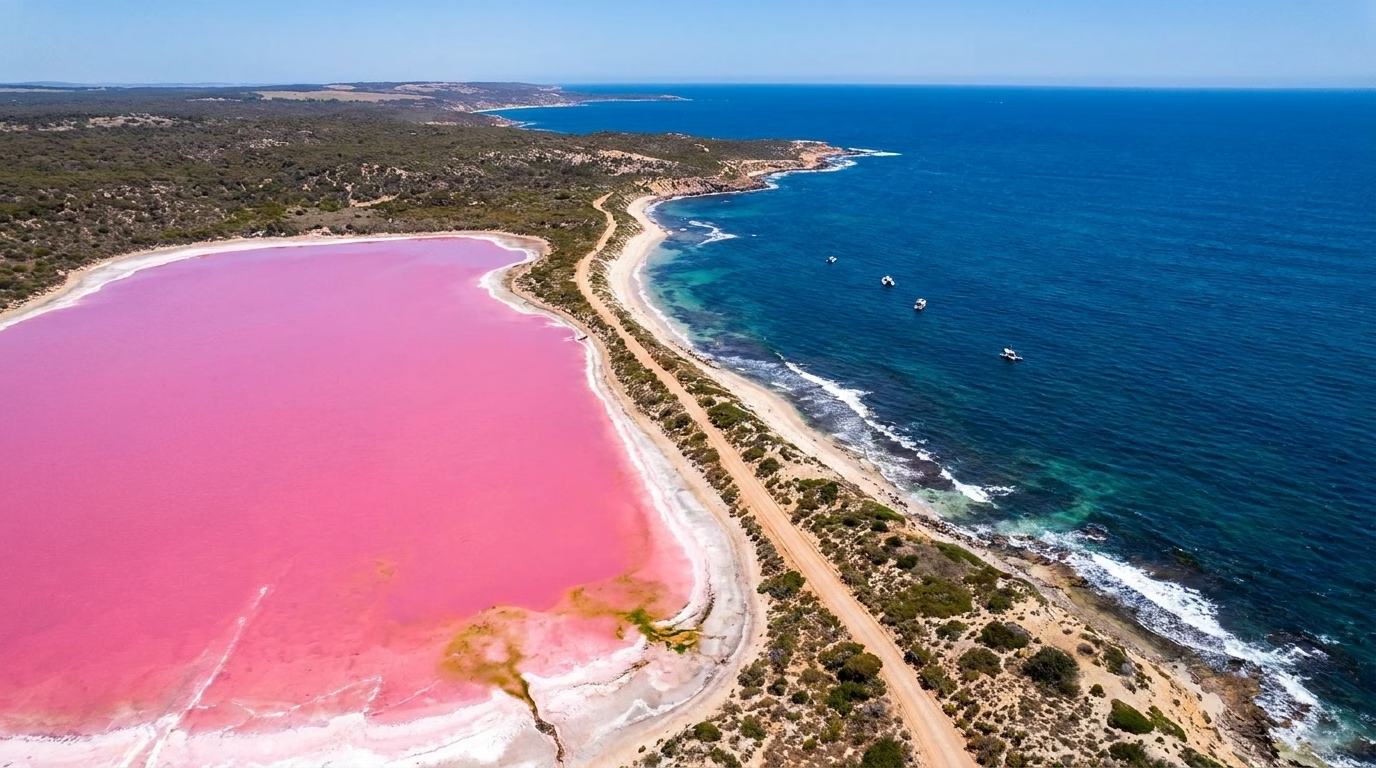
Imagine flying over a coastline and spotting a lake the color of strawberry milk. There are pink lakes around the world that look so unreal, many people assume the photos are edited. They are not. These lakes really do turn bright pink, and the reason is a fascinating mix of salt, sunshine and tiny living things.
Here is why some lakes turn pink, plus 10 of the most beautiful pink lakes you can visit or admire from above.
Why are some lakes pink?
Most pink lakes are extremely salty. In that harsh, salty water, very few creatures can survive, but some tiny organisms thrive. One of the most important is a microalga called Dunaliella salina. When the water gets saltier and the sun gets stronger, it produces beta-carotene, the same orange-red pigment found in carrots, to protect itself.
Salt-loving bacteria and microbes called halophiles add even more red and pink tones. When billions of these organisms fill a lake, the whole thing glows pink. The color often changes with the seasons: it is usually strongest in hot, dry months, when evaporation makes the water saltier.
1. Lake Hillier, Western Australia
Lake Hillier is the world’s most famous pink lake. It sits on Middle Island, off the south coast of Western Australia, and is only about 600 meters long. From the air, its bubblegum color looks incredible next to the green forest and the deep blue Southern Ocean.
Scientists found that its color comes mainly from salt-loving microbes, including a bacterium called Salinibacter ruber. The lake is hard to reach by land or boat, so most visitors see it on scenic flights from the town of Esperance. Heavy rain can change its color, so it is worth checking recent reports before booking.
2. Hutt Lagoon, Western Australia
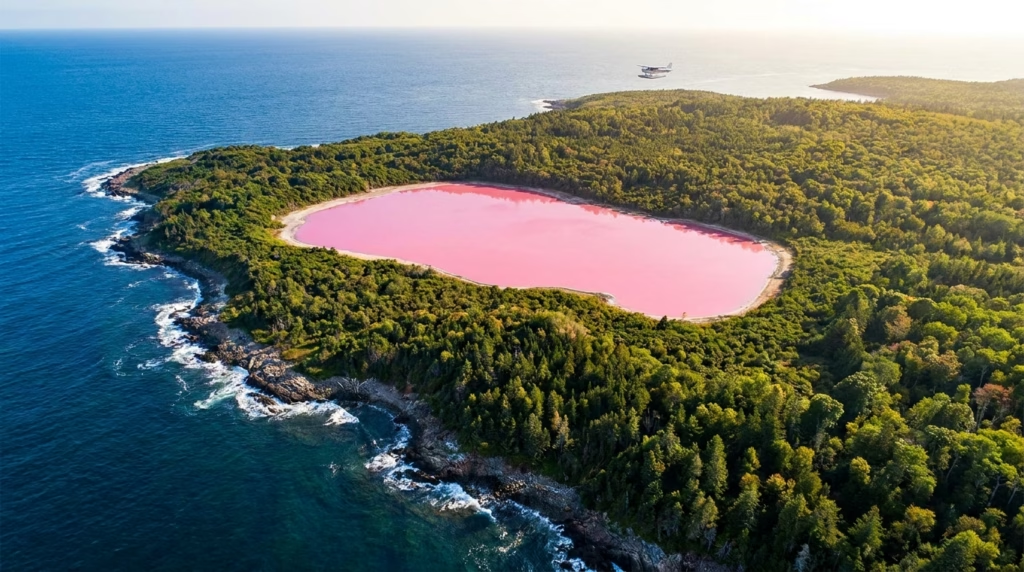
Hutt Lagoon near Port Gregory is one of the easiest pink lakes to visit in Australia. It is about 14 kilometers long and three to six times saltier than the ocean. Its color comes from Dunaliella salina, and the lagoon is even used to farm the microalgae for beta-carotene.
The pink is usually brightest from mid-morning to mid-afternoon on clear, sunny days.
3. Lake Retba, Senegal
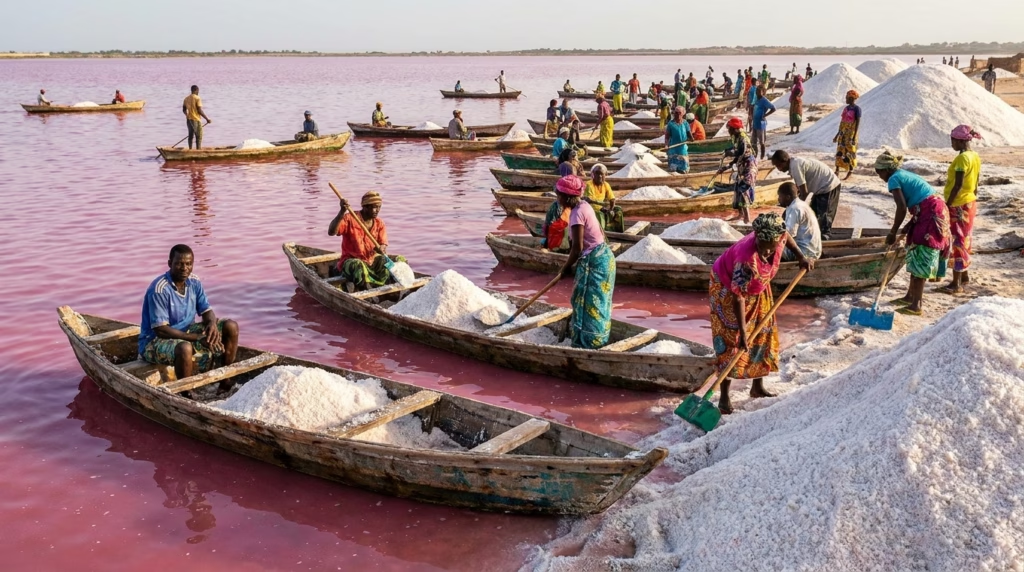
Lake Retba, also called Lac Rose, lies about 30 kilometers northeast of Dakar in Senegal. In the dry season, its water can be saltier than the Dead Sea, and salt-loving microbes give it a strong pink color, especially from around November to June.
Local workers harvest thousands of tonnes of salt from the lake each year by hand. Visitors can float easily in the salty water, but it can sting the skin. The lake was also famous as the finish line of the Paris-Dakar Rally for many years.
4. Las Salinas de Torrevieja, Spain
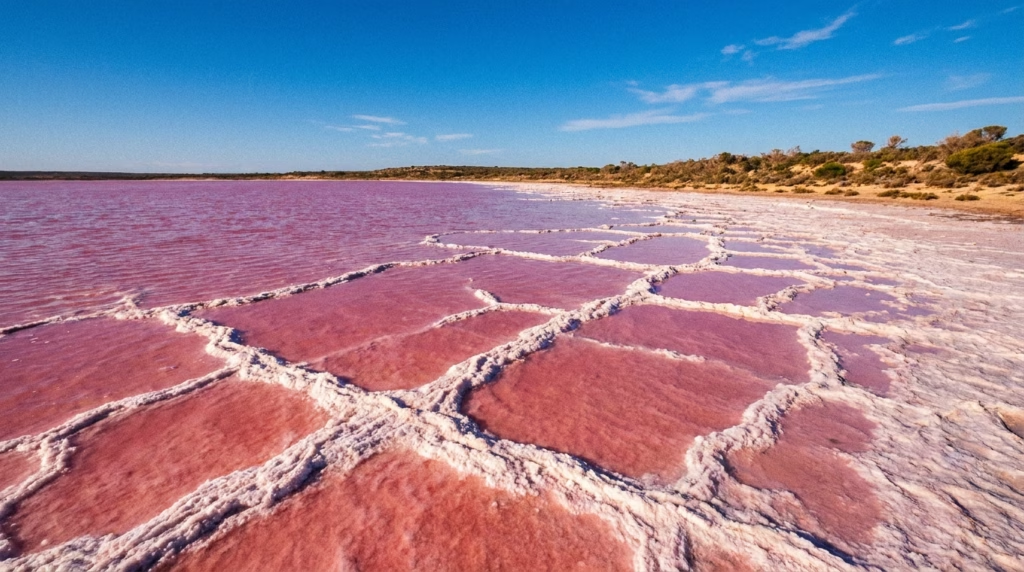
On Spain’s Mediterranean coast, the salt lagoons of Torrevieja turn pink in summer, when salinity can rise above 30%. The area is a protected natural park and an important salt-producing site, and it attracts flamingos and many other birds.
5. Lake Natron, Tanzania
Lake Natron in northern Tanzania is pink and red for slightly different reasons. Its water is full of soda minerals, and it can be extremely alkaline and hot. That makes it dangerous for most animals, but it is the world’s most important breeding site for lesser flamingos, with millions of birds gathering there.
6. Lake Bumbunga, South Australia
Lake Bumbunga, about two hours north of Adelaide, is an easy roadside stop for travelers. Its color shifts through the year: pink as summer evaporation makes it saltier, blue or gray after winter rains, and white when it dries into a salt pan.
7. Quairading Pink Lake, Western Australia
This lake in Western Australia’s Wheatbelt region is split by a road, and the two sides often show completely different colors at the same time. One half can be pink while the other looks pale green or blue-gray, thanks to differences in salt levels and microbes. The best colors usually appear from November to March.
8. Tuz Gölü, Turkey
Tuz Gölü, or Salt Lake, in central Turkey is huge but very shallow. In summer, much of the water evaporates and the remaining brine can turn pink. The lake produces a large share of Turkey’s table salt and is a breeding ground for flamingos.
9. Kati Thanda-Lake Eyre, South Australia
Australia’s largest lake is usually a dry, white salt crust. On the rare occasions it fills with water, shrinking pools can turn pink as they become saltier. Its lowest point is about 15 meters below sea level, the lowest place in Australia.
10. Sasyk-Sivash and the Sivash lagoons, Crimea
The shallow Sivash lagoons, between mainland Ukraine and the Crimean Peninsula, can turn pink in summer. The area is currently affected by conflict, so it is not a place to plan a trip to right now.
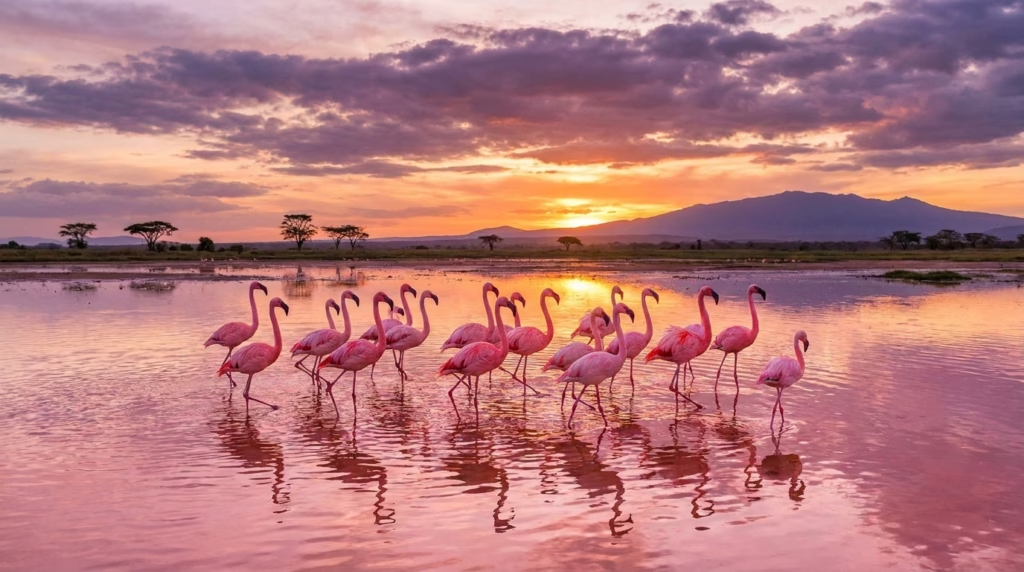
Tips for seeing pink lakes around the world
- Go in the dry season. Hot, sunny weather makes the color stronger.
- Visit around midday. Bright overhead sunlight usually shows the most vivid pink.
- See them from above. Many pink lakes look best from a plane, drone or high viewpoint.
- Protect the lakes. Stay on paths, do not walk on fragile salt crusts and follow local rules.
Pink lakes around the world prove that nature can be just as colorful as our imagination. Whether you fly over Lake Hillier or stop by Lake Bumbunga on a road trip, they are a natural wonder worth adding to your bucket list.
If you enjoyed reading about these pink lakes around the world, you might also love our stories about the most beautiful waterfalls in the world and rare natural phenomena.
Frequently asked questions
Why are some lakes pink?
Most pink lakes are very salty. Microalgae such as Dunaliella salina and salt-loving microbes produce red and pink pigments, which color the water.
What is the most famous pink lake in the world?
Lake Hillier on Middle Island, Western Australia, is the most famous. Most visitors see it from a scenic flight from Esperance.
Can you swim in a pink lake?
In some, like Lake Retba in Senegal, you can float easily, but the very salty water can irritate skin. Many pink lakes are protected or hard to reach, so check local rules first.
When is the best time to see a pink lake?
Usually in hot, dry months on sunny days around midday, when the water is saltiest and the light is strongest.
Save this for later
You might also like
Want more? Browse all our Nature stories.